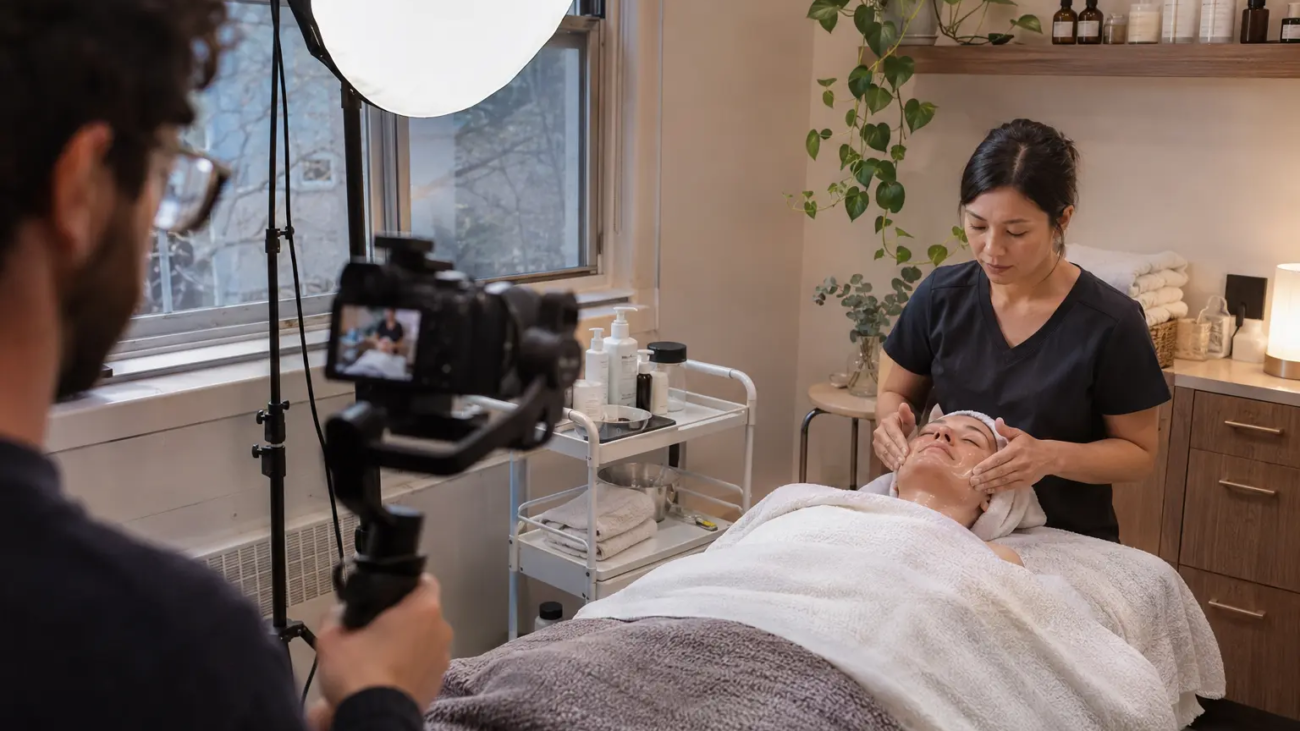
A med spa sells something people cannot try before they book: how it feels to walk into your clinic, lie down in your treatment room and trust your team with their face. Your photos and videos are the closest thing to a trial visit. When they look generic, dark or borrowed from a stock library, potential clients scroll on to the next clinic, even when your work is better. Good med spa content creation closes that gap.
Greenday Photography creates monthly photo and video content for med spas, laser clinics, facial studios and skin clinics across Toronto and the GTA. We plan, film and edit Reels, treatment-room photos, provider portraits and website imagery, and we build every shoot around the advertising rules that apply to aesthetic clinics in Canada, so the content we deliver is content you can actually publish.
This page explains what we create, how we photograph skin and treatments honestly, how consent and Health Canada rules shape a med spa shoot, and what monthly content costs. For the bigger picture of how our monthly service works across industries, start with our content creation service for Toronto businesses.
Why Med Spa Content Is Different From Other Businesses
We film restaurants, cafés, salons and retail stores, and med spas are the one industry where the rules change what we are allowed to show. Three things make aesthetic clinic content different:
- Trust is the product. A client booking laser hair removal or a chemical peel is trusting your team with their skin. Content has to show cleanliness, calm and competence before it shows anything else.
- Clients are patients. Faces, skin conditions and treatments are personal health information. We never film or post anything without written consent, and some moments we choose not to film at all.
- Advertising is regulated. Clinics cannot promote prescription products such as neuromodulators to the public by name, and regulated health professionals in Ontario have their own rules on testimonials and before-and-after images.
Many content creators treat a med spa like a beauty salon: a quick injection close-up, trending audio, a big promise in the caption, and the clinic is left to deal with the consequences. Our approach is the opposite. We plan the content calendar around what you can safely publish, then make that content look as good as it possibly can.
Med Spa Content Creation: What We Create for Aesthetic, Laser and Facial Clinics
- Clinic and treatment-room photography: bright, accurate images of your reception, treatment rooms and equipment for your website, Google Business Profile and booking platforms.
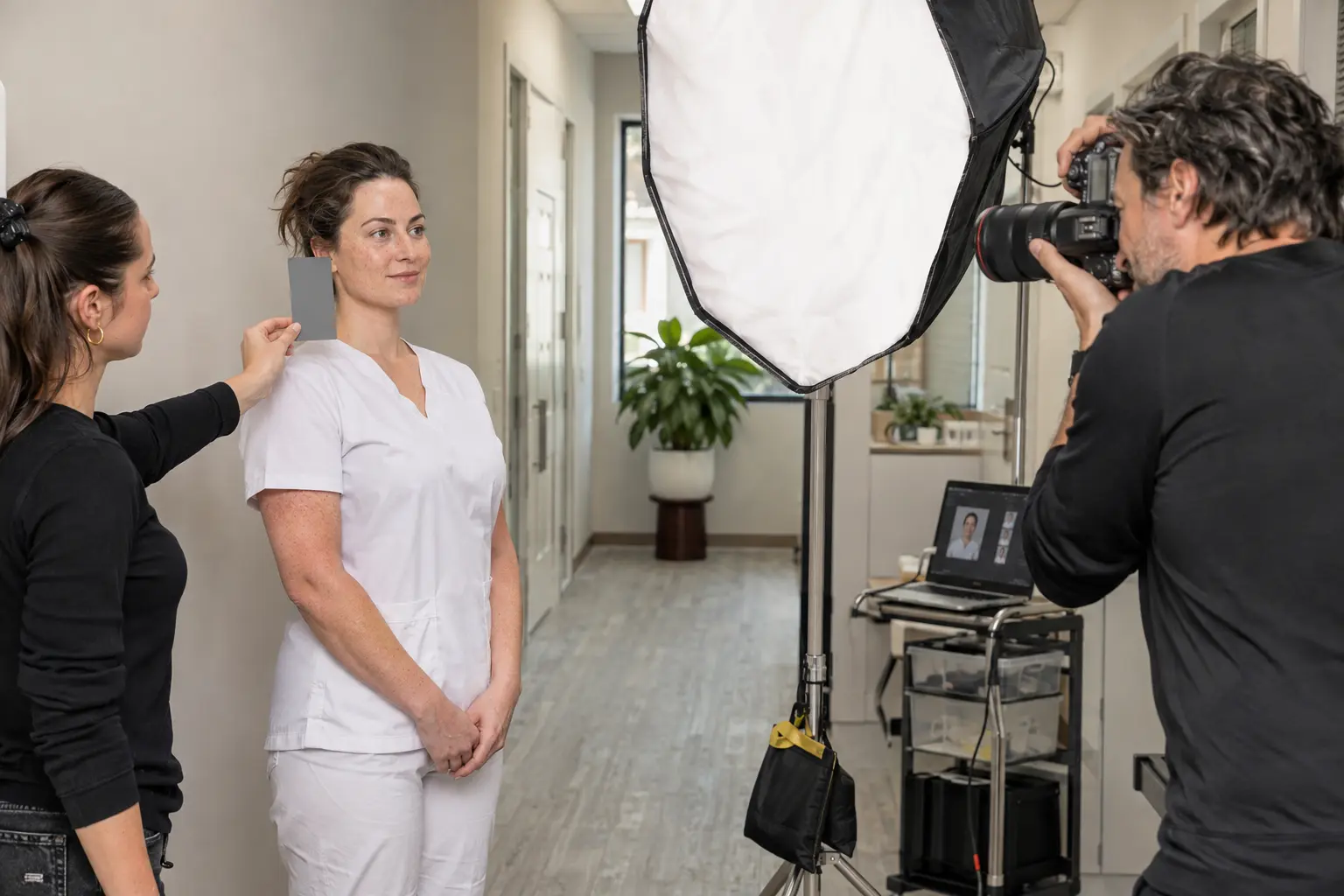
- Provider and team portraits: headshots and environmental portraits of your nurses, aestheticians, laser technicians and medical director, so clients know exactly who they will meet. If you have a larger team, see our on-site team headshots.
- Short-form Reels and TikToks: vertical videos for Instagram, TikTok and Facebook, edited with captions, on-brand text and music that suits a calm clinical space.
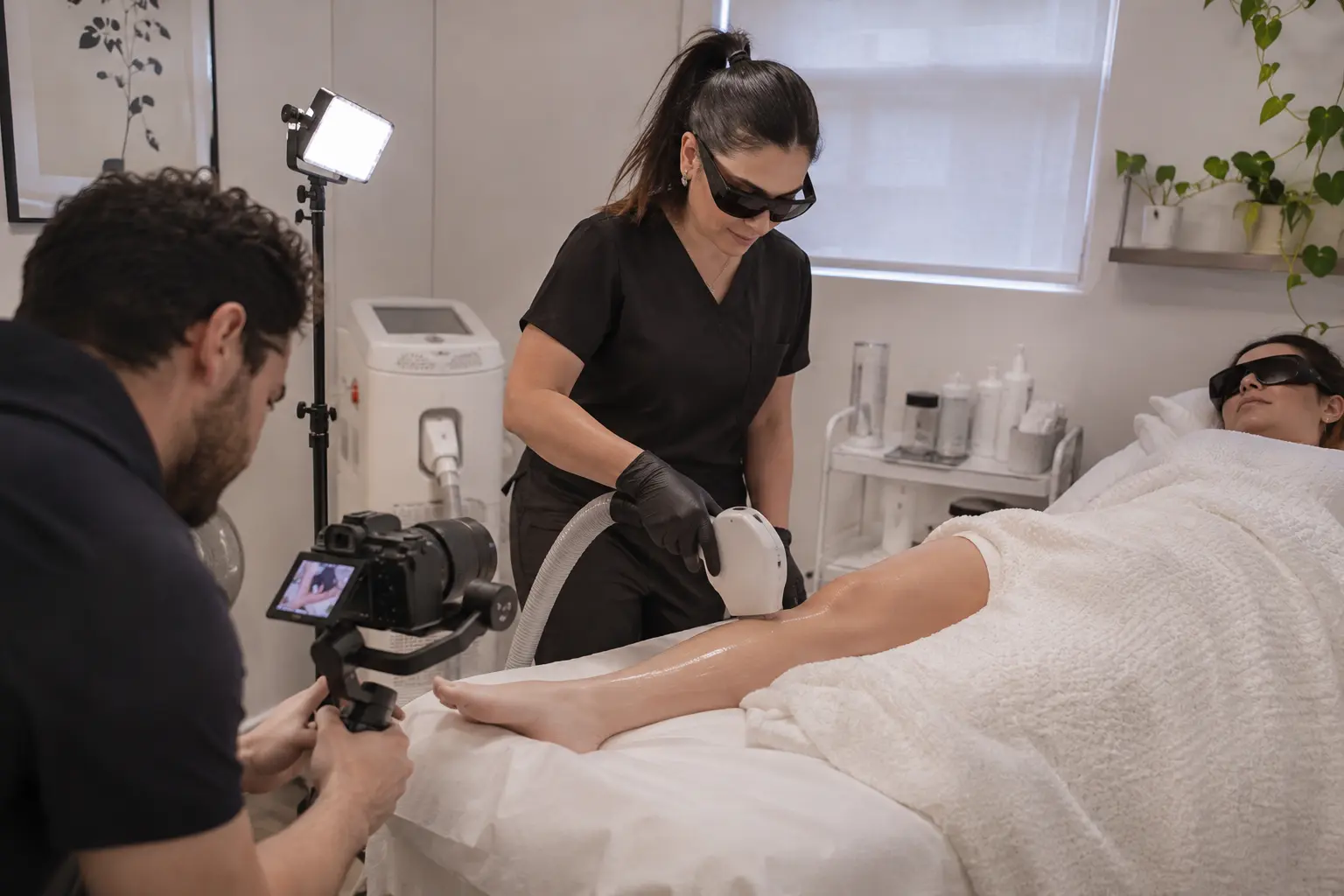
- Treatment process videos: the steps of a facial, a laser session or a skin consultation, filmed with a consenting model or team member and without naming prescription products.
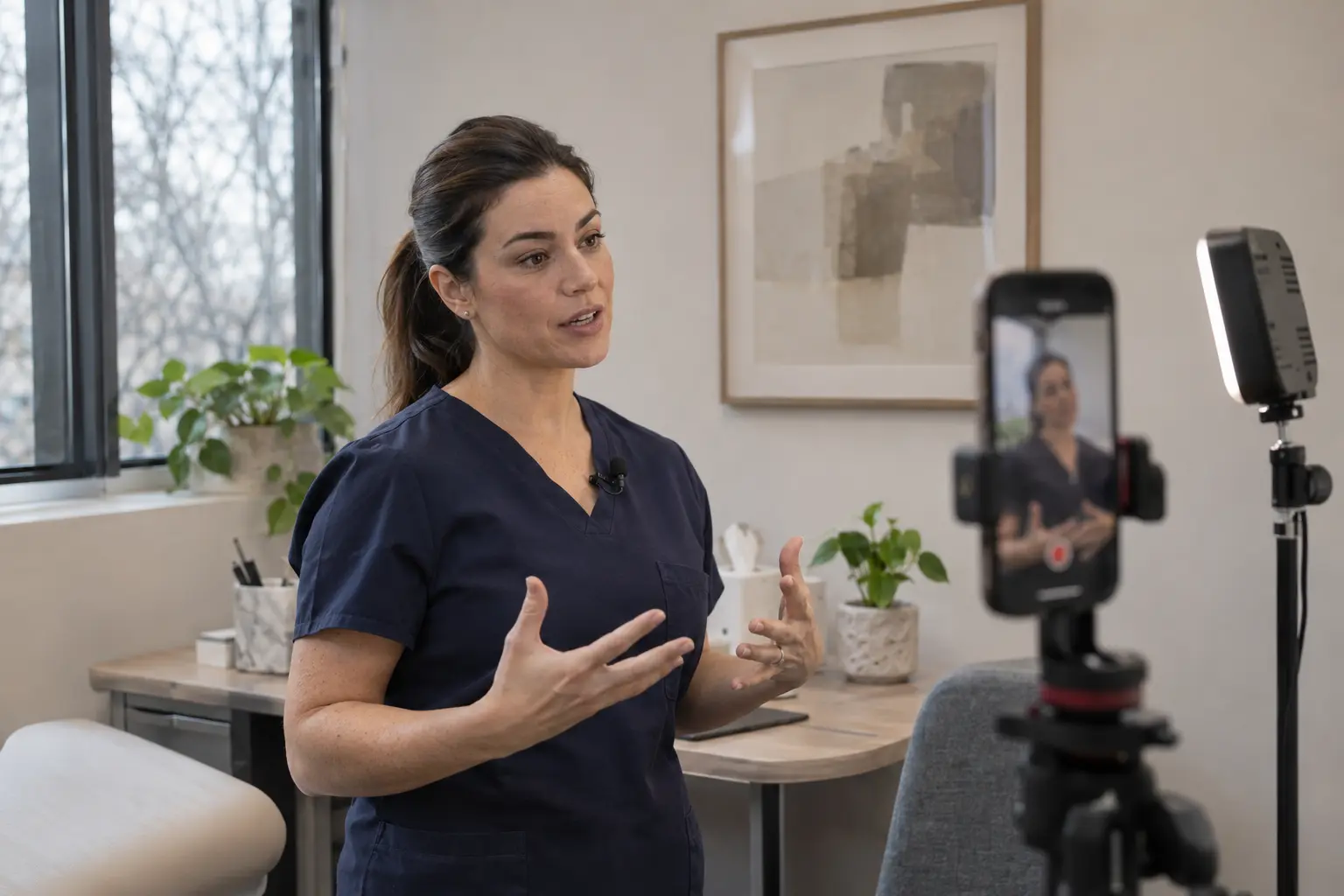
- Educational videos: your provider answering the questions clients actually ask, such as how many laser sessions are usually needed, what to expect after a peel, or how to prepare for a consultation.
- Retail and product photos: the skincare you sell in the clinic, styled and lit for your website, online store and social posts.
- Website hero video: a short, quiet loop of your space and team for the top of your homepage.
Every package includes planning, filming, editing and delivery in the right sizes for each platform. On the Professional and Growth packages, we can also publish the content to your channels for you.
Reel Ideas That Work for Aesthetic Clinics
The med spa content that performs best is rarely loud. It is calm, educational and personal. These are the formats we plan into a typical month:
- The walk-in. One smooth shot from your front door, past reception and into a prepared treatment room. It answers the first question every new client has: what does this place feel like?
- Treatment, step by step. A facial or laser session shown as a sequence of clean, close shots: cleansing, protective eyewear, the handpiece moving across the skin, the cooling step. No product names and no promises about results.
- Meet the provider. Thirty seconds of your nurse or aesthetician introducing themselves and explaining what they love about the work. These videos often build more trust than any promotion.
- Myth or fact. Your provider answers one common misconception per video, for example whether you can wear makeup after a facial, or why laser settings are adjusted for different skin types. Your medical director reviews the script first.
- Aftercare in twenty seconds. Simple instructions clients save and share, delivered by your provider straight to camera.
- Behind the scenes. Room preparation, cleaning routines, the morning team huddle. Showing your standards is one of the strongest trust signals a clinic can post.
- Seasonal content. Laser hair removal planning before summer, winter skin dryness, skin prep before the holidays: topics that follow how Toronto clients actually book.
On a single content day, we usually film enough for several weeks of posts, mixing two or three of these formats so your feed never repeats itself.
Recent Clinic Work: The Derma Lounge, Aurora
Here is a real example of the approach described above, filmed and edited by our team for The Derma Lounge in Aurora. The brief was to show a first visit from the client’s point of view, so the edit follows one client from the front door through a digital skin analysis and consultation, into the treatment room for a facial, and back to reception.
Notice what the video focuses on: the space, the provider’s hands and care, the consultation and the client experience. No prescription products are named and no results are promised, which keeps the content usable on the clinic’s website, Instagram and Google Business Profile.
A Second Edit From the Same Clinic
For a longer promo, we opened on the clinic’s sign and the framed credentials in the waiting area, then moved through a skin consultation and each step of a facial: cleansing, device work, mask and finishing. Showing qualifications on camera is one of the simplest ways for a clinic to build trust without making a single claim about results.
How We Photograph Skin Honestly
Skin is the hardest subject in commercial photography. Get the light wrong and every pore looks like a problem. Smooth it too much in editing and the image looks fake, which is exactly what aesthetic clients have learned to distrust. This is how we handle skin on set:
- Large, soft light. We use big diffused sources or window light placed close to the subject. Small, hard lights exaggerate texture and make normal redness after a treatment look worse than it is.
- Correct, consistent colour. We set a custom white balance in every room and shoot a colour reference at the start of each setup. Clinic lighting is often a mix of LED panels and daylight, which can turn skin green or orange if nobody checks it.
- Minimal retouching. We remove temporary distractions such as a stray hair, lint or a reflection on a device. We never reshape faces or erase real skin texture, and we do not retouch any image that could read as a treatment result.
- Matched setups for comparison images. When a clinic is permitted to use comparison images, both photos must use the same distance, lens, light and angle. Mismatched lighting is the main reason comparison photos look misleading.
- Real skin tones. Toronto is diverse, and your content should show that your team works confidently with every skin type, always with the consent of the person on camera.
Consent, Privacy and Advertising Rules in Ontario
This section is not legal advice. Your medical director and your regulatory college have the final word on what your clinic can publish. But these are the rules we plan every med spa shoot around, and you should know them before you hire anyone to create content.
Prescription products cannot be promoted by name
Health Canada does not allow prescription drugs to be advertised directly to the public. Its guidance on illegal marketing of prescription drugs uses Botox as an example and lists procedure videos, before-and-after pictures and testimonials about benefits as common problems. Clinics can advertise that they offer medical cosmetic services, as long as no specific product is named and the message is about the service rather than the drug. In practice, we film the consultation, the clinic and the provider, and we leave out product names, packaging and close-ups that identify a prescription product.
Testimonials and before-and-after images are restricted
Regulated health professionals in Ontario face limits on testimonials in their advertising. For physicians, the CPSO advertising policy also says that before-and-after photos and videos should not be shown where the public is likely to see them unsolicited, and that consent should be discussed only after the treatment, with the patient able to review the images and withdraw consent. Nurses and other providers follow their own college standards. If your clinic wants comparison images, we shoot them to a consistent standard, and your team decides whether and where they can be used.
Written consent for every person on camera
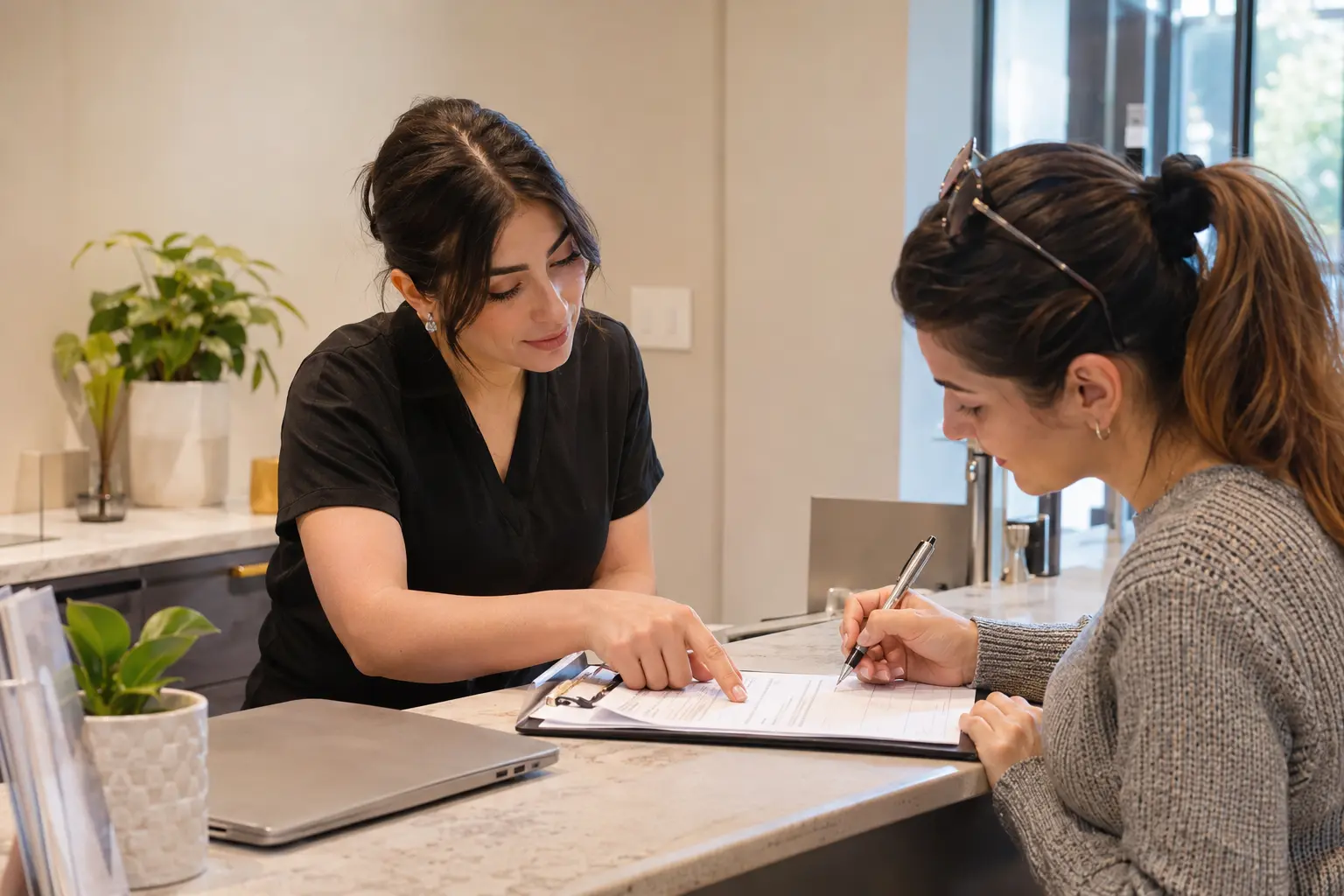
For this reason, everyone who appears in your content, including staff, models and clients, signs a written release before filming that explains where the content will be used. Clients can say no at any point, and saying no never affects their treatment. We avoid filming identifiable clients in the middle of medical procedures. Instead, when we need a treatment shot, we use a team member or a booked model.
Privacy in the background
Before we press record, we check every frame for client names on screens, appointment books, charts and anything else that could identify a patient. We film treatment rooms only when no client is booked in them.
How a Med Spa Content Day Runs
A content day is planned in advance so your clinic keeps running. A typical day looks like this:
- Planning call, the week before. We review your services, your priorities for the month, the treatments you want to highlight and anything your medical director needs to approve. You receive a shot list and a script outline for each talking-head video.
- Arrival and setup, about 30 minutes. We light one room at a time, usually a room you have blocked from bookings for the session.
- Space and detail shots, about 45 minutes. Reception, treatment rooms, devices, retail shelves and the small details that show a clinic is cared for.
- Treatment process filming, 60 to 90 minutes. With a consenting model or team member, we film the steps of two or three services.
- Provider videos and portraits, about 60 minutes. Headshots, environmental portraits and short talking-head videos. Most providers are nervous on the first take and natural by the third.
- Pack-down. We leave every room exactly as we found it.
A Starter session runs up to four hours, which comfortably covers this plan. Clinics with several providers or locations usually choose the Professional or Growth package for two or three sessions a month.
Monthly Content Packages and Pricing
Med spa content runs on the same transparent monthly packages we offer every business:
| Package | Price | What you get |
|---|---|---|
| Starter | $1,099/month | 1 session (up to 4 hours); 1 video and 3 photos per week |
| Professional | $2,099/month | 2 sessions; 2 videos and 3 photos per week; Instagram and Facebook publishing; monthly review |
| Growth | $2,999/month | 3 sessions; 3 videos and 6 photos per week; Instagram, Facebook and YouTube; priority editing |
Styled product photography for your retail skincare starts at $25 per image, and website design and SEO can be added when your clinic needs a site that turns new attention into bookings. Full details are on our content creation packages page.
Common Med Spa Content Mistakes We Fix
- Stock photos of models who have never visited the clinic. Clients notice, and trust drops the moment they walk in and the space looks nothing like the pictures.
- Dark, yellow treatment-room photos taken on a phone at the end of a long day.
- Injection close-ups with product names, prices and results captions posted to a public feed.
- Heavy beauty filters on staff portraits, which undermine a clinic that sells natural-looking results.
- One great shoot, then nothing for six months. Both algorithms and clients reward consistency, which is why we work monthly.
- Content that shows treatments but never the people who perform them. Clients book providers, not devices.
Frequently Asked Questions
Do you film injectable treatments?
We film consultations, preparation and the clinic environment around injectable services, but we do not create content that promotes a named prescription product. We recommend your medical director reviews anything related to injectables before it is published.
Can we feature real clients in our videos?
Yes, with written consent obtained the right way. Many clinics use team members or booked models for treatment shots, and real clients for experience-focused moments such as a welcome at reception.
Who writes the scripts for educational videos?
We draft outlines based on your services and the questions your clients ask, and your provider reviews them for medical accuracy. You approve every piece of content before it goes live.
Do you work with laser clinics and facial studios that are not medical spas?
Yes. Laser hair removal clinics, facial and skincare studios, brow and lash studios and skin clinics follow the same planning process. The compliance checks simply depend on the services you offer.
Which areas do you cover?
We work with clinics across Toronto and the GTA, including Downtown Toronto, East York, North York, Markham and Richmond Hill.
Book a Med Spa Content Day
If your clinic’s feed does not reflect the care your team puts into every treatment, let’s change that. Tell us about your clinic, your services and what you want to highlight next month, and we will send back a content plan you can review with your medical director before we film anything.
Images on this page are illustrations of the work described, not photos of client clinics. Nothing on this page is legal or regulatory advice.
Add a Comment